Making Music in MMET What to Expect at Square One
By Brooklyn Bevington | Staff Writer - HBSlick Magazine
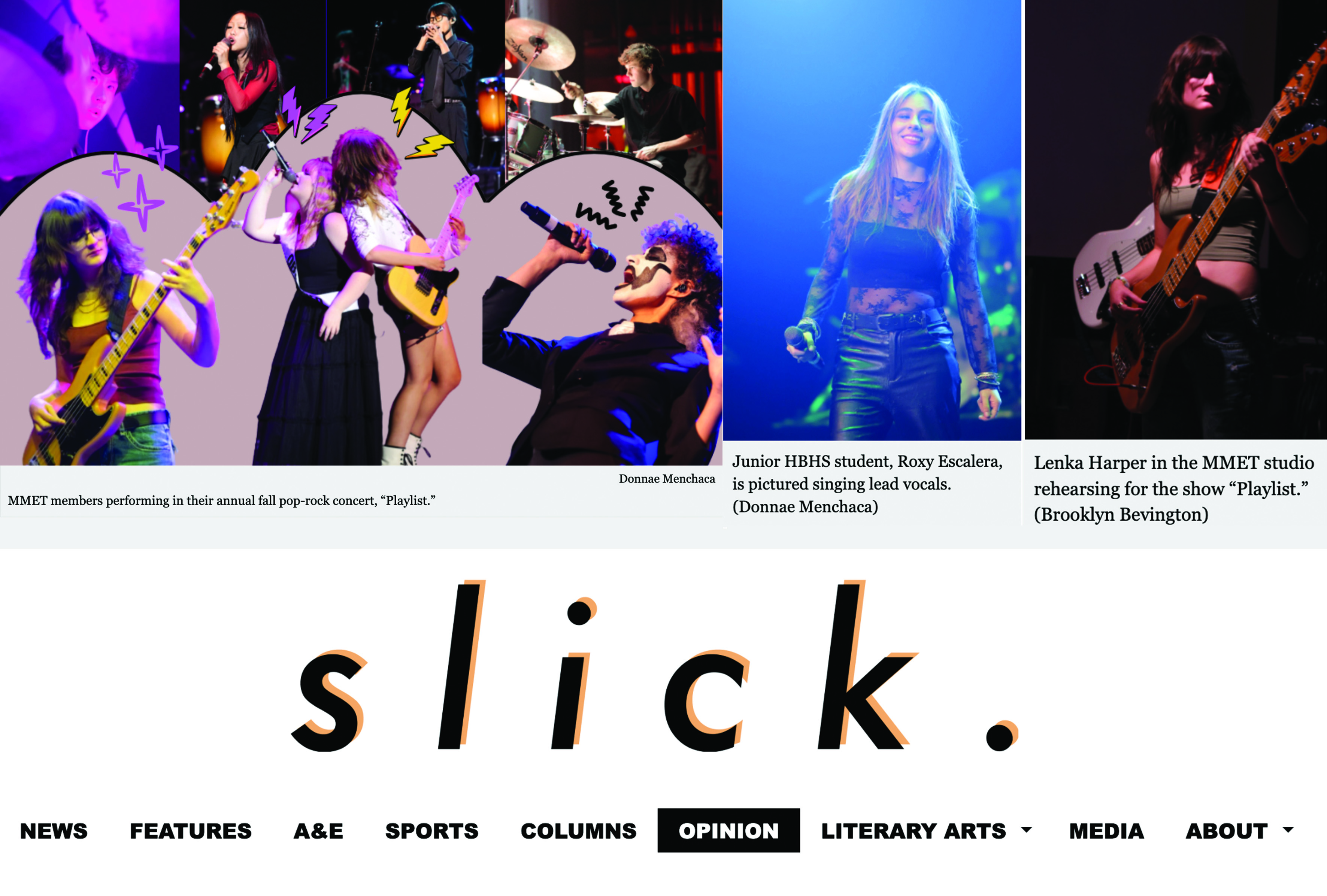
Many people find it completely nerve-racking to get up on stage in front of hundreds of people, while others may find it the most thrilling experience out there. For those who enjoy it, the Music, Media, Entertainment and Technology (MMET) program at the Huntington Beach Academy of Performing Arts (APA) could be the perfect fit. MMET students can take many different pathways, with the option to major in vocal performance, guitar, bass, keys, drums, media, and more.
Auditioning can be quite scary and many new students go in blindly with no idea of what to expect. Knowing what to expect for your audition can take a lot of weight off your shoulders and make the process much smoother.
Unity Rivera, a sophomore MMET vocalist, said, “Auditioning for MMET was a whirlpool of emotions, I felt super excited but also so nervous at the same time. I was ready but I was still nervous as if I didn’t know my song. I knew there were higher ups in there that made it really scary, but I went in being like, ‘If I don’t make it I always have another year, which just means I need to practice more so I can get better and improve.’ I was very prepared, but still my nervousness was definitely there.”
The audition process for the 2025-2026 school year had multiple stages to it. First, everyone learns two songs: one from a provided list and one of your choice, along with a twelve-bar blues chord progression. The students get about two months to learn their songs, then they must write a short essay explaining why they want to join the program and what they can bring to the table. After learning the pieces, they audition by performing in front of four or five MMET teachers.
Lenka Harper, a freshman bassist in the program, said, “I’m a bassist for MMET, and my audition prep process was quite a long one. I spent most of my time learning the song they chose for me to play and my prior knowledge of jamming helped a lot. The song I did for my personal choice was not too complex of a song but perfectly in the middle of not super simple and I could still show I have enough talent and get my point across. I knew this program is what I wanted to do, so I walked in there and put my all into my performance.”
In her essay, Harper talked about how she prepared for different parts of the audition process with her prior experience. Before auditioning, it’s always good to practice playing in front of people.
Charlotte Palmer, a guitarist and junior at Huntington Beach High School (HBHS), said, “I actually auditioned twice because I tried to do it my freshman year. I was really scared, and even though I prepared a lot, it wasn’t the best but I worked super hard to be here. They do make it super welcoming, and since I didn’t get in on my first try, it really just pushed me to go 110% and try my hardest to do better for my next chance.”
Once the whole audition process is over, the students will either get placed in the MMET Pathway, get a call back, apply to be placed in another major, or they can always try again for MMET the next year.
For a call back, all someone needs to do is learn the verse and chorus of any song they chose. Similar to the first audition, the student gets around a month to learn their song and once again perform it for the teachers.
Although the MMET program may seem scary, at one point or another everyone was in the same boat, and there are so many people involved who love to help others and make everyone feel included. In the world of MMET, there is never an odd one out.
© 2026 Huntington Beach Academy for the Performing Arts. All Rights Reserved. Accessibility Statement - Privacy Policy - Sitemap